Digital advertising has moved far beyond basic demographics. Age, gender, and location alone are no longer enough to win attention, let alone conversions. Today, the real advantage lies in understanding behavior, intent, and patterns. This is where Similar Audiences targeting becomes a powerful lever for growth.
If you have ever wondered how brands seem to “find the right people” without wasting budget, the answer often sits here. This strategy allows you to expand your reach while still staying relevant, which is exactly what both startups and established businesses need.
This article breaks down what Similar Audiences targeting is, how it works, when to use it, and how to maximize results without falling into common traps.
What Is Similar Audiences Targeting?
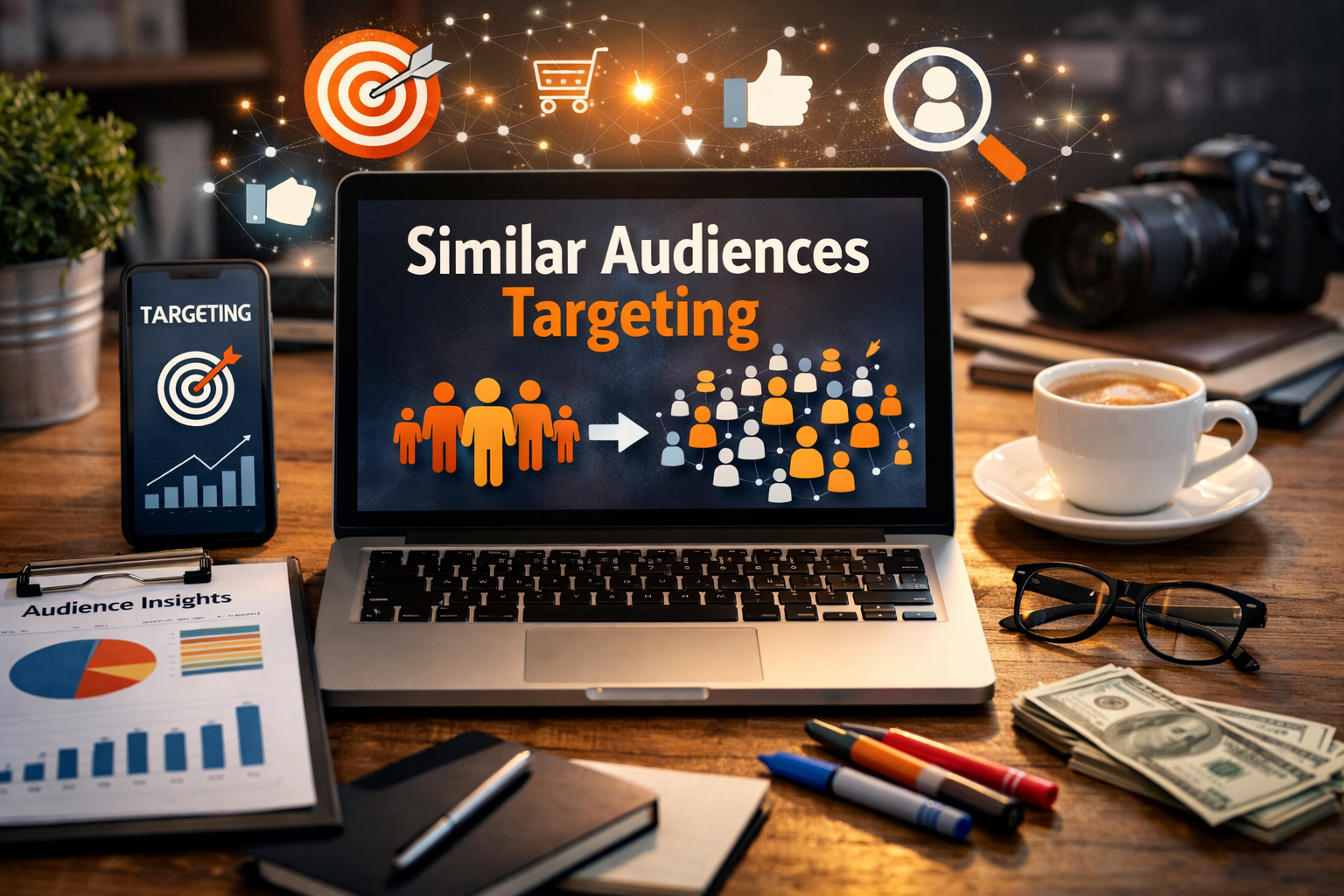
Similar Audiences targeting is a method used in digital advertising platforms to find new users who share characteristics with your existing audience.
In simple terms, you provide a “source audience” such as:
- Website visitors
- Customer lists
- App users
- Converters
Then the platform analyzes patterns from that group and builds a new audience with similar behaviors, interests, and intent signals.
The idea is straightforward:
If a certain group of people already interacts with your business, there are likely many others who behave similarly. Instead of guessing who they are, the algorithm identifies them for you.
This is commonly used in platforms like Google Ads (through optimized targeting and audience expansion) and Meta Ads (Lookalike Audiences).
Why Similar Audiences Matter More Than Ever
Digital competition is tighter than ever. Cost-per-click continues to rise, and attention spans are shorter. Running ads without precise targeting often leads to wasted budget and poor conversion rates.
Similar Audiences solve a critical problem: scaling without losing relevance.
Instead of targeting broad interests or random keywords, you are effectively telling the platform:
“Find me more people like my best customers.”
This approach tends to produce:
- Higher click-through rates
- Better conversion rates
- More efficient cost per acquisition
- Faster scaling potential
For young entrepreneurs and growing businesses, this can mean the difference between burning budget and building a sustainable funnel.
How Similar Audiences Actually Work
Behind the scenes, platforms use machine learning to analyze your source audience. They look at signals such as:
- Browsing behavior
- Search intent
- Content engagement
- Purchase patterns
- Device usage
- Demographics (as supporting data, not the main driver)
From these signals, the system builds a model and matches it against millions of users. It then selects those who are statistically similar.
What matters here is not one single factor, but a combination of behaviors. That is why Similar Audiences often outperform manual targeting.
The Quality of Your Source Audience Is Everything
A common mistake is assuming that Similar Audiences always work well. In reality, the output is only as good as the input.
If your source audience is weak, your results will be inconsistent.
Strong source audiences include:
- People who completed a purchase
- High-value customers
- Users who spent significant time on your website
- Leads that converted into real clients
Weak source audiences include:
- Random website visitors with no intent
- Very small datasets
- Unqualified traffic from low-quality campaigns
If you feed poor data into the system, you will get poor targeting in return. This is one of the most overlooked aspects of performance marketing.
When Should You Use Similar Audiences?
Similar Audiences are not always the first step. They work best when you already have some data.
You should consider using them when:
- You already have consistent conversions
- Your remarketing audience is performing well
- You want to scale beyond your existing audience
- You are testing new markets without starting from zero
For beginners, it is often better to first focus on:
- Basic targeting
- Keyword intent
- Retargeting
Once you have data, Similar Audiences can take you to the next level.
Similar Audiences vs Retargeting: What’s the Difference?
These two are often confused, but they serve different roles.
Retargeting focuses on people who already interacted with your brand.
Similar Audiences focus on new people who resemble those users.
Think of it like this:
- Retargeting is closing the deal
- Similar Audiences are expanding the pipeline
Both are important, but they should not replace each other.
A healthy advertising strategy usually combines:
- Retargeting for conversion
- Similar Audiences for scaling
Practical Example (So It Makes Sense)
Imagine you run an online clothing brand.
You have 1,000 customers who purchased in the last 30 days. Instead of targeting random fashion interests, you upload or use this data as your source audience.
The platform then identifies patterns such as:
- Preferred styles
- Price sensitivity
- Shopping behavior
- Time of activity
It then builds a Similar Audience of, say, 100,000 people who behave similarly.
Now your ads are shown to people who are statistically more likely to buy, even if they have never heard of your brand.
This is far more efficient than broad targeting.
Common Mistakes That Kill Performance
Even though Similar Audiences are powerful, many campaigns fail because of poor execution.
1. Using Low-Quality Data
If your source audience includes unqualified traffic, your targeting will be diluted.
2. Scaling Too Fast
Increasing budget aggressively can break the algorithm’s learning phase.
3. Ignoring Creative Quality
Even the best targeting cannot save weak ad creatives.
4. Not Segmenting Audiences
Different customer groups behave differently. Mixing them reduces precision.
5. Expecting Instant Results
Machine learning needs time to optimize. Early results can be misleading.
How to Optimize Similar Audiences Campaigns
To get consistent results, you need a structured approach.
Start by focusing on your source audience:
- Use converters instead of general visitors
- Segment by value (high spenders vs low spenders)
- Update data regularly
Then refine your campaigns:
- Test multiple creatives
- Adjust bidding strategies
- Monitor frequency and saturation
It is also important to align your landing page with the audience. If your ad attracts the right people but your landing page does not match expectations, conversion rates will drop.
The Role of Creative in Similar Audiences
Targeting gets you visibility. Creative gets you results.
When using Similar Audiences, your ads should:
- Speak directly to user intent
- Be visually clear and not overly complex
- Deliver value quickly
- Avoid exaggerated claims
You are targeting people who are “similar,” not identical. That means your messaging should be broad enough to resonate, but specific enough to feel relevant.
Is Similar Audiences Still Effective Today?
There has been a lot of discussion around privacy changes, cookie restrictions, and platform updates. Some features have evolved or been replaced, especially in Google Ads.
However, the core concept remains highly relevant.
Platforms are shifting toward:
- Automated targeting
- AI-driven optimization
- First-party data usage
This actually makes Similar Audience strategies more important, not less. Businesses that collect and use their own data effectively will have a clear advantage.
Similar Audiences for Small Businesses vs Big Brands
There is a perception that advanced targeting strategies are only for large companies. That is not accurate.
Small businesses can benefit just as much, sometimes even more.
For small businesses:
- Start with a smaller but high-quality audience
- Focus on conversion data
- Scale gradually
For larger brands:
- Use multiple segments
- Test different audience sizes
- Combine with advanced funnel strategies
The key difference is not budget, but data quality and execution.
A Realistic Expectation (Important)
Similar Audiences are not a magic switch that instantly increases revenue.
They are a tool.
Results depend on:
- Data quality
- Campaign structure
- Creative execution
- Budget control
- Market competition
If those elements are weak, the results will reflect that.
Approaching this strategy with realistic expectations will help you make better decisions and avoid unnecessary frustration.
Final Thoughts
Similar Audiences targeting is one of the most efficient ways to grow your reach without losing relevance. It bridges the gap between data and discovery, allowing you to move beyond guesswork.
For young marketers and business owners, this strategy offers a clear path to scaling campaigns more intelligently. Instead of chasing random audiences, you build on what already works.
The critical takeaway is simple:
Focus on data quality first, then scale with precision.
When used correctly, Similar Audiences can transform your advertising from experimental to structured, and from uncertain to consistently measurable.